


Trains are a fundamental means of land transport for freight due to their capacity, sustainability, and their key role in the intermodal transport chain by connecting ports and airports with regional logistics hubs. This is why the state of railway infrastructure directly impacts the efficiency of freight transport. A well-designed and well-connected railway system is also the ideal partner for road transport, as it helps optimize truck usage and thereby reduce the carbon footprint.
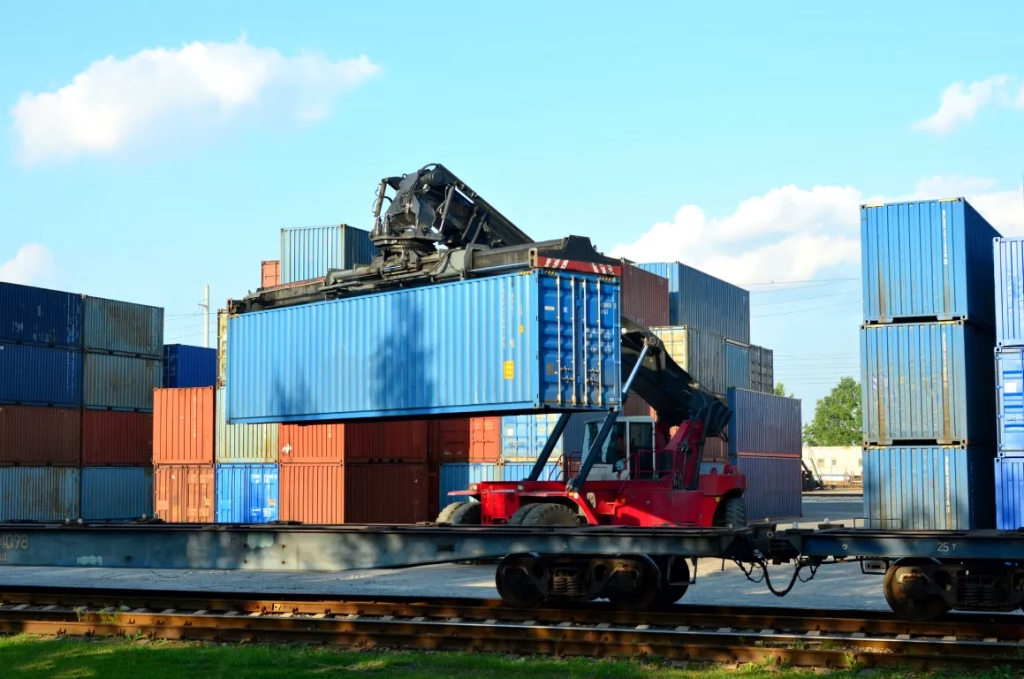
The Role of Railways in Intermodal Freight Transport Efficiency
In international shipments, when a vessel arrives at a port and the goods are unloaded, there is still a crucial phase of transport remaining: getting each shipment to its final destination. Equally important is how the initial stage of the journey is managed, and in both cases, the presence or absence of adequate railway infrastructure affects the efficiency of the entire process.
Intermodal transport requires robust infrastructure and interconnections that facilitate collaboration between different modes of transport. Moreover, it is essential to have a tailored strategy that considers the characteristics of each shipment and handles all necessary formalities efficiently.
Railway Infrastructure as a Link in the Logistics Chain
Railway infrastructure promotes efficiency in freight transport by acting as a link between other modes of transportation and ensuring each plays its role in the supply chain: maritime for long distances, rail for medium distances, and road for short distances.
How Rail Motorways Improve Freight Transport Efficiency
A perfect example of how railway infrastructure affects freight transport efficiency is rail motorways. These combine road and rail transport to optimize resources and promote sustainability. Trucks transport goods by road to the start of the rail motorway, where they are loaded onto special rail wagons and taken to the destination terminal.
Spain’s first rail motorway was launched in July 2024 between the Port of Valencia and the Madrid-Abroñigal logistics terminal. The Railway Infrastructure Administrator (Adif) is developing 15 more rail motorway projects across the country to reduce operational costs, lower emissions, and ease road infrastructure congestion.
Railway Strategy for More Efficient Freight Infrastructure
The launch of rail motorways is part of the Indicative Strategy for the development, maintenance, and renewal of railway infrastructure, promoted by the Ministry of Transport and Sustainable Mobility as part of the Recovery, Transformation, and Resilience Plan. Rail transport is a key element for enhancing the freight network, European corridors, and interoperability across Europe.
Key Objectives of the Ministry of Transport’s Indicative Strategy
Specifically, the main objectives of the strategy include:
- Ensuring national and international interoperability through the development of TEN-T (Trans-European Transport Network) corridors and promoting intermodal transport initiatives.
- Boosting rail freight traffic by emphasizing its environmental sustainability, improving productivity, and developing new management and operational models.
- Enhancing operational safety in rail transport by applying measures aimed at improving operations and reducing accidents.
- Promoting transport digitization and innovation to ensure connected mobility.
If you want to learn about all the possibilities that rail freight transport offers, at Startrans we can advise you on the best options. Contact us.