


When discussing security strategies in ports and maritime terminals, various aspects must be considered, including the protection of infrastructure and vessels, access control and facility surveillance, cargo and container inspection, preservation of the marine environment, and the development of port activities in accordance with current legislation, ensuring compliance with regulations related to the protection of people.
The EU Maritime Security Strategy and its Action Plan establish the European global framework for addressing threats and challenges related to maritime navigation, such as illicit activities, competition for natural resources, and the protection of infrastructures. Meanwhile, the 2024 National Maritime Security Strategy defines maritime security as a combination of preventive and responsive measures aimed at both protecting the maritime environment from threats and intentional illegal acts, and mitigating the effects of natural hazards, accidents, and damage to the environment and people.
What are the main security strategies in ports and maritime terminals, what objectives do they pursue, and what tools do they use?
Security Strategies for the Protection of Port Infrastructure
Security strategies in ports and terminals are essential for ensuring commercial activity and the maritime transport of goods. As highlighted in Chapter 1, “Maritime Security: Spain’s Strategic Challenge”, from the 2024 National Maritime Security Strategy: “90% of imports and 60% of exports are carried out by sea. The 459 million tons of goods entering and leaving our ports annually illustrate the importance of maritime transport for the normal functioning of life in our country.”
For efficient and safe management of ports and maritime terminals, it is crucial to leverage the advantages offered by new digital and communication technologies, both for the regular development of productive activity and for minimizing risks associated with maritime operations and potential illicit actions. To the complexity of the geopolitical context, we must add the increasing threats related to crime, piracy, illicit trafficking of goods, cyberattacks, and even the deterioration of the marine ecosystem.
Risks are often interconnected, so when addressing security strategies in ports and maritime terminals, the complexity of the chain reactions that an incident may trigger must be considered.
Risks and Threats in Ports and Maritime Terminals
The 2024 National Maritime Security Strategy identifies four categories of risks and threats:
- Actions attributable to a hybrid strategy: coordinated and synchronized actions aimed at exploiting the vulnerabilities of states and their institutions through efforts to foster political destabilization at national and international levels.
- Threats to national interests in the maritime domain.
- Illicit maritime trafficking and cross-border or transnational crime.
- Risks to the environmental status of the marine environment, including its living resources, and the effects and impacts of climate change on the coast.
Best Practices to Ensure Maritime Security in Ports and Terminals
Within port and maritime terminal security strategies, several best practices used by maritime security agents to prevent incidents include:
- Vessel inspections: periodic checks to detect any anomalies that might endanger safety.
- Maintenance supervision: agents report any onboard components that do not meet safety standards.
- Coordination of loading and unloading operations: thorough inspections, warehouse and hold checks, and strict protocol adherence prevent hazards.
Rigorous controls and anomaly reporting, along with surveillance systems installed in ports, ensure the safe and normal operation of activities, as well as the safety of facilities and individuals.
Technology to Improve Navigation Safety in Ports and Maritime Terminals
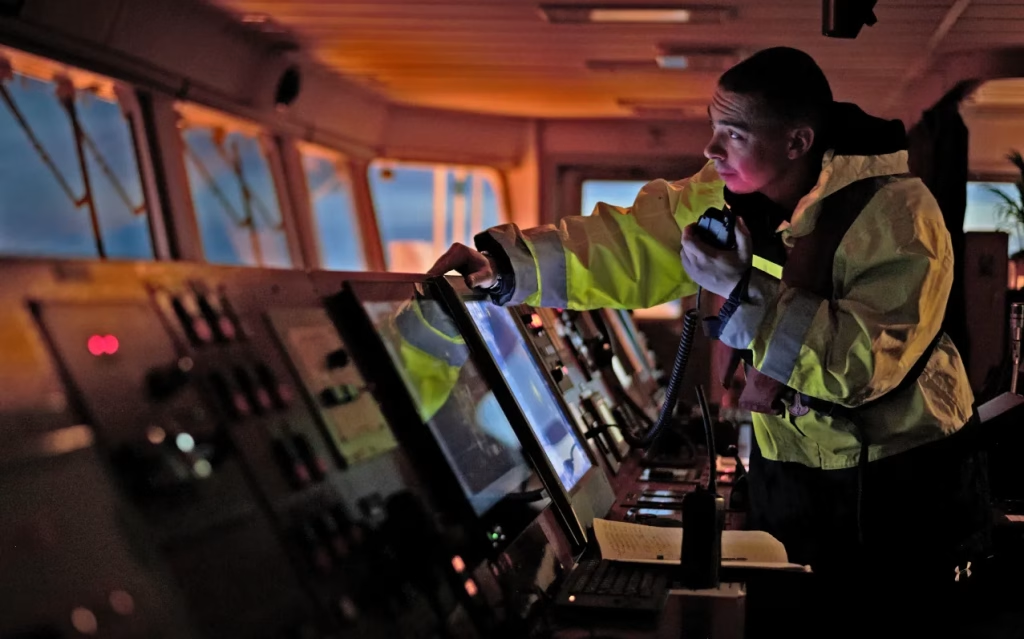
In maritime traffic, technology has enabled the development of integrated navigation systems for vessels, which combine information from various navigational aids to provide accurate data on the location, condition, and speed of each ship. Other advancements in vessel safety include high-speed satellite communications, the automated tracking system that shows the location of nearby vessels, and the electronic chart display and information system.
If you would like to know how we guarantee the safety of our customers’ international freight transport, please contact Startrans.