


Freight transport is one of the world’s most essential economic activities. Every community depends on the movement of goods to ensure growth, productivity, and prosperity. However, this constant flow of cargo across countries and continents is also one of the largest contributors to global greenhouse gas emissions. Maritime transport alone, which carries around 80% of global trade by volume, accounts for approximately 3% of worldwide greenhouse gas emissions. Against this backdrop, reducing the environmental impact of freight transport is no longer simply a corporate objective—it has become a regulatory requirement and a key competitive advantage. Sustainability in maritime freight transport is already a legal obligation within the European Union, and at Startrans we see it as an opportunity to create additional value for our customers by integrating sustainable practices into every logistics operation.
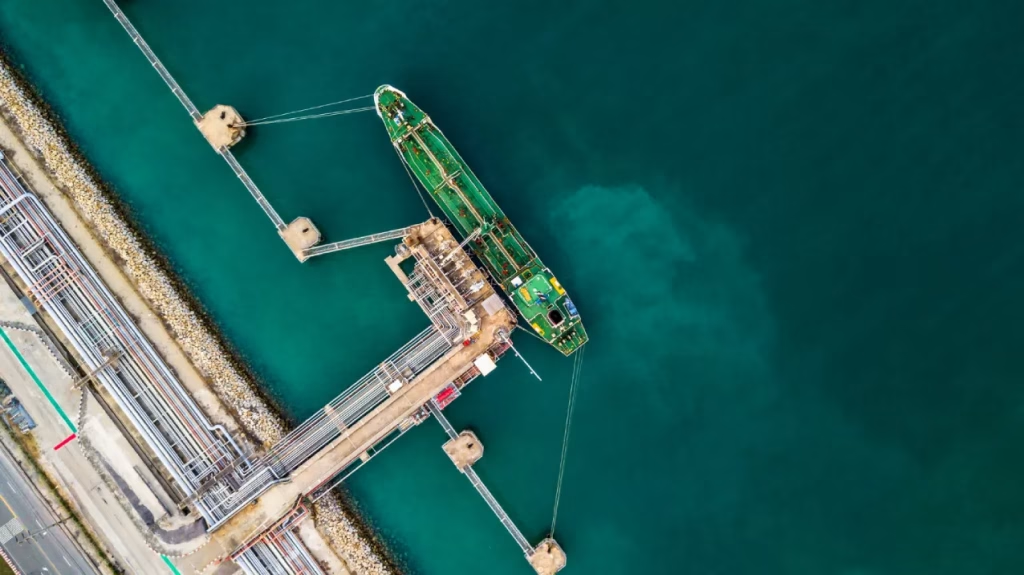
How can we reduce the environmental impact of freight transportation?
Reducing the environmental impact of freight transportation is a necessary goal that begins with planning and ends with implementation; moreover, it is a multidisciplinary task that involves every link in the supply chain. Below, we share some of the strategies to follow.
Route Optimisation and Cargo Consolidation
One of the most effective ways to reduce the environmental impact of freight transport is through smarter route planning. Maximising the capacity of every container and vehicle by implementing strategies such as cargo consolidation and groupage significantly reduces the number of journeys required, lowering emissions per tonne transported. Thanks to digital technologies and route optimisation software, logistics providers can calculate the most efficient transport combinations, minimise empty kilometres, and adjust shipping frequencies to match actual demand.
Multimodal Transport Solutions
While maritime shipping remains the backbone of international trade, reducing environmental impact requires combining it with other transport modes. An integrated multimodal logistics strategy makes it possible to select the most energy-efficient option for each stage of the journey. For long-distance transport, rail and sea freight generate a significantly lower carbon footprint than road transport. Designing multimodal supply chains that reserve trucks primarily for last-mile delivery is therefore one of the most effective ways to decarbonise the logistics sector.
Alternative Fuels and Fleet Efficiency
Reducing the environmental impact of freight transport also involves accelerating the transition towards cleaner energy sources. Liquefied Natural Gas (LNG), biofuels, methanol, and green hydrogen are becoming increasingly viable alternatives to conventional fossil fuels. In the maritime sector, additional technical measures also contribute to lower emissions, including slow steaming, improved hull design, and the use of shore power while vessels are docked to avoid running auxiliary engines during port stays.
Regulatory Compliance as a Competitive Advantage
Environmental sustainability is no longer optional—it is driven by increasingly demanding international regulations. The International Maritime Organization (IMO) has set the objective of achieving net-zero greenhouse gas emissions by 2050. At the same time, initiatives such as the Energy Efficiency Existing Ship Index (EEXI) and the Carbon Intensity Indicator (CII) are already influencing shipping operations worldwide. Furthermore, the inclusion of maritime transport within the European Union Emissions Trading System (EU ETS) reinforces the industry’s commitment to decarbonisation. Staying ahead of these regulations not only helps companies avoid compliance risks but also provides greater operational certainty and strengthens customer confidence.
Startrans: Supporting More Sustainable Logistics
In an increasingly complex logistics landscape, freight forwarders play a vital strategic role. At Startrans, we coordinate every stage of the supply chain, helping our customers select the most sustainable transport solutions, partnering with shipping lines committed to reducing emissions, and providing full visibility of the carbon footprint associated with each shipment. We believe that sustainability and operational efficiency go hand in hand. By combining both, businesses can reduce costs, improve supply chain performance, and contribute to more responsible international trade.
Would you like to make your logistics operations more sustainable without compromising efficiency? Contact the Startrans team to discover how we can help optimise your supply chain while reducing its environmental impact.