


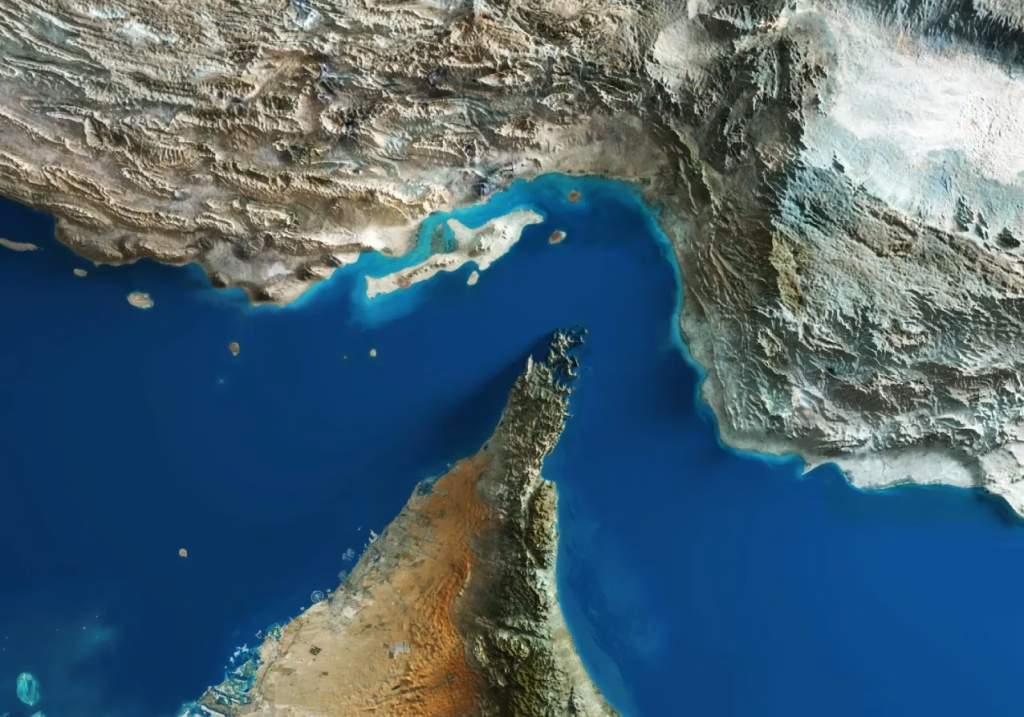
The Strait of Hormuz continues to be the epicentre of the global maritime trade crisis. According to the United Nations Conference on Trade and Development (UNCTAD), as a consequence of the war in Iran, vessel traffic through the strait has fallen by 95%, while oil, gas, and marine fuel prices, as well as tanker freight rates and insurance premiums, have increased considerably.
The traffic restrictions imposed by Iran and the United States as measures of pressure and retaliation within the conflict have resulted in more than 850 vessels becoming trapped in the area, with an evident impact not only on fuel supply chains, but also on raw materials and industrial components. It is important to remember that 20% of the world’s oil trade passes through Hormuz, along with significant volumes of liquefied natural gas and fertilisers, among other goods.
Decline in Freight Rates
Although Drewry’s World Container Index (WCI) has recorded a third consecutive week of declining freight rates, now standing at USD 2,216 per 40-foot container, tensions in the Persian Gulf continue to keep shipping companies on alert, forcing them to actively adjust routes and pricing. According to the consultancy, “despite high fuel costs and geopolitical risks, freight rates continue to decline steadily due to excess capacity and weak demand.”
Among the measures adopted to manage the situation, shipping lines are announcing blank sailings, which are expected to reduce capacity in May by 3% on routes between Asia and Northern Europe and by 10% between Asia and the Mediterranean.
The continuation of the war climate is worsening market instability. Announcements such as “Project Freedom”, the operation presented by United States President Donald Trump to unblock the Strait of Hormuz, remain uncertain in terms of how they will evolve. Iran has responded by stating that military escort operations for merchant vessels will be considered a violation of the ceasefire, and amid this exchange of warnings and threats, a solution to the current international trade bottleneck does not appear to be getting any closer.
Impact on Air Traffic
Attention should not be focused solely on maritime traffic, as the closure of Hormuz is also affecting commercial aviation. The sharp increase in jet fuel prices, which have doubled since the beginning of the war, is leading airlines to cancel thousands of flights. Lufthansa has announced the reduction of 20,000 short-haul flights during the summer season, representing 120 cancellations per day. The reason lies in the fact that more than 40% of the fuel used by European airlines comes from Gulf countries. The situation has become so concerning that the Executive Director of the International Energy Agency, Fatih Birol, warned in mid-April that Europe had “around six weeks of aviation fuel remaining.”
In response, the European Commission has created a Fuel Observatory to monitor production, imports, exports, and stock levels. UNCTAD has also launched the Strait of Hormuz Dashboard, bringing together updated indicators on maritime transport, food, energy, and finance. The organisation’s latest Global Trade Update warned that the momentum with which the year began has been paralysed by increasing geopolitical uncertainty, affecting investment prospects, demand, and economic development.
International freight transport requires in-depth market knowledge and continuous monitoring of supply chains and the events that affect them. At Startrans, we understand your needs and offer tailor-made solutions. Contact us to learn more about our services.