


In road freight transport, every minute counts. Delays can affect delivery deadlines, increase operating costs and even compromise customer satisfaction. This is why fleet maintenance in road logistics goes far beyond simply ensuring that vehicles are in optimal condition. It is a strategic factor that directly impacts the reliability and efficiency of transport operations.
Road freight transport plays an essential role in the supply chain, particularly for domestic and European operations and door-to-door services. At Startrans, we have the expertise, experience and flexibility to provide the service that best suits each shipment, including full truckloads (FTL), less-than-truckloads (LTL), international groupage, dangerous goods transport, temperature-controlled transport and milk run logistics.
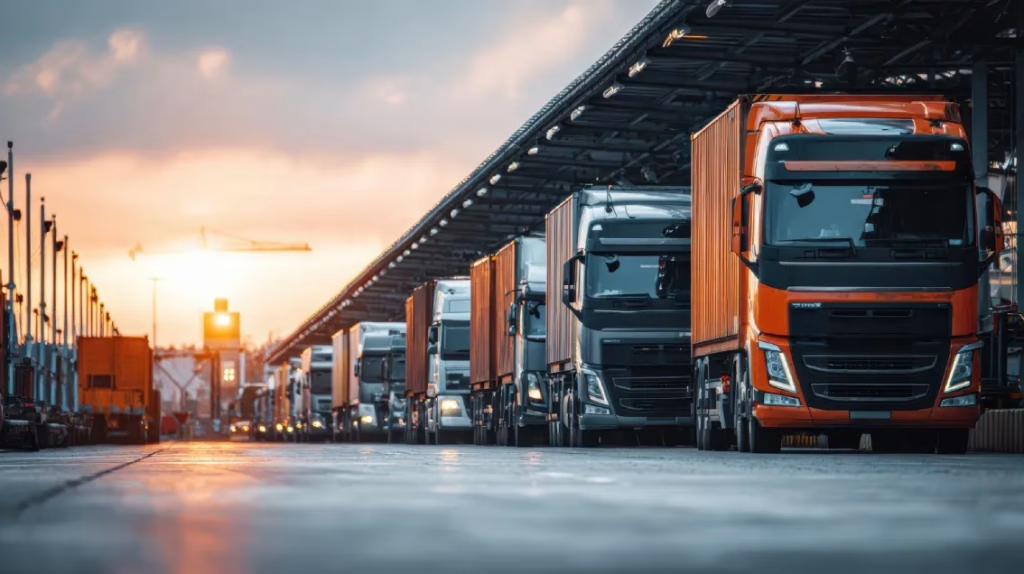
How Does Fleet Maintenance Improve Safety in Road Logistics?
One of the main reasons fleet maintenance is so important is its role in improving safety and reducing disruptions. Preventive maintenance helps minimise the risk of unexpected breakdowns. Regular inspections of critical components such as brakes, tyres, suspension, steering and electronic systems make it possible to identify potential problems before they lead to incidents on the road.
Prevention is essential for protecting both drivers and transported goods, while also avoiding disruptions that could affect the entire logistics schedule. In an industry where delivery times are increasingly demanding, keeping vehicles in optimal operating condition represents a significant competitive advantage.
Greater Punctuality and Better Service Quality
Punctuality is another key factor when considering the importance of fleet maintenance in road logistics. It is also one of the most highly valued aspects for companies relying on road freight services. Ensuring reliable delivery times requires effective strategies to manage and minimise downtime, together with a fleet that is always ready to operate. Greater vehicle availability makes it easier to meet planned transit times and respond quickly to new transport requirements.
Investing in maintenance and reducing unexpected incidents also helps lower the costs associated with emergency repairs, replacement vehicles and penalties caused by delays, ultimately improving the profitability of transport operations.
Fleet Maintenance and Sustainability
The environmental impact of fleet maintenance should not be overlooked. A vehicle with a properly tuned engine, tyres in good condition and regularly serviced mechanical systems consumes less fuel and produces fewer emissions.
Improved energy efficiency therefore contributes to reducing the carbon footprint of road transport — an increasingly important consideration both in terms of regulatory requirements and companies’ commitment to more sustainable logistics.
Technology Supporting Fleet Maintenance
Digitalisation has transformed the way fleets are managed. Today, telematics systems, sensors and fleet management platforms make it possible to monitor vehicle conditions in real time, schedule maintenance, track mechanical parameters and identify anomalies before they develop into serious breakdowns. Technology therefore plays an increasingly important role in preventive maintenance and in improving the overall reliability of road freight operations.
Towards More Reliable Road Logistics
Fleet maintenance is not simply a technical requirement. It is an investment that directly contributes to safety, efficiency, sustainability and service quality. For a logistics operator such as Startrans, having access to a reliable road transport network means being able to provide customers with solutions adapted to their specific needs, while ensuring that every shipment reaches its destination in the best possible conditions and within the expected timeframe. Looking for a reliable road freight solution? Contact Startrans and discover how we can support your transport needs.